Small changes compound into big ones
You don't need to overhaul your life. You need to find the one habit that shifts the whole pattern. Here's how.
Most people don’t realize chronic stress is affecting them. It doesn’t announce itself. It shows up as the third coffee to get through the afternoon. The workout at 10pm because it’s the only way to fall asleep. The sugar craving that hits like clockwork at 3pm. These feel like choices. They’re actually signals.
The challenge isn’t effort. Most people are already trying. The challenge is that effort without visibility lands in the wrong place.
When Data Becomes Useful
We have more health data than ever. Steps counted. Hours slept. Calories logged. Heart rate variability charted. And yet most people feel less in control of their health, not more.
Data becomes useful when it has context — when it connects what you’re experiencing across different areas of your health and shows you what’s actually driving what. Knowing you slept six hours is a data point. Understanding why you slept six hours, and how that’s connected to your afternoon energy crash and your evening cravings — that’s insight.
The difference between a data point and an insight is the connection.
Your Mind and Body Create Loops
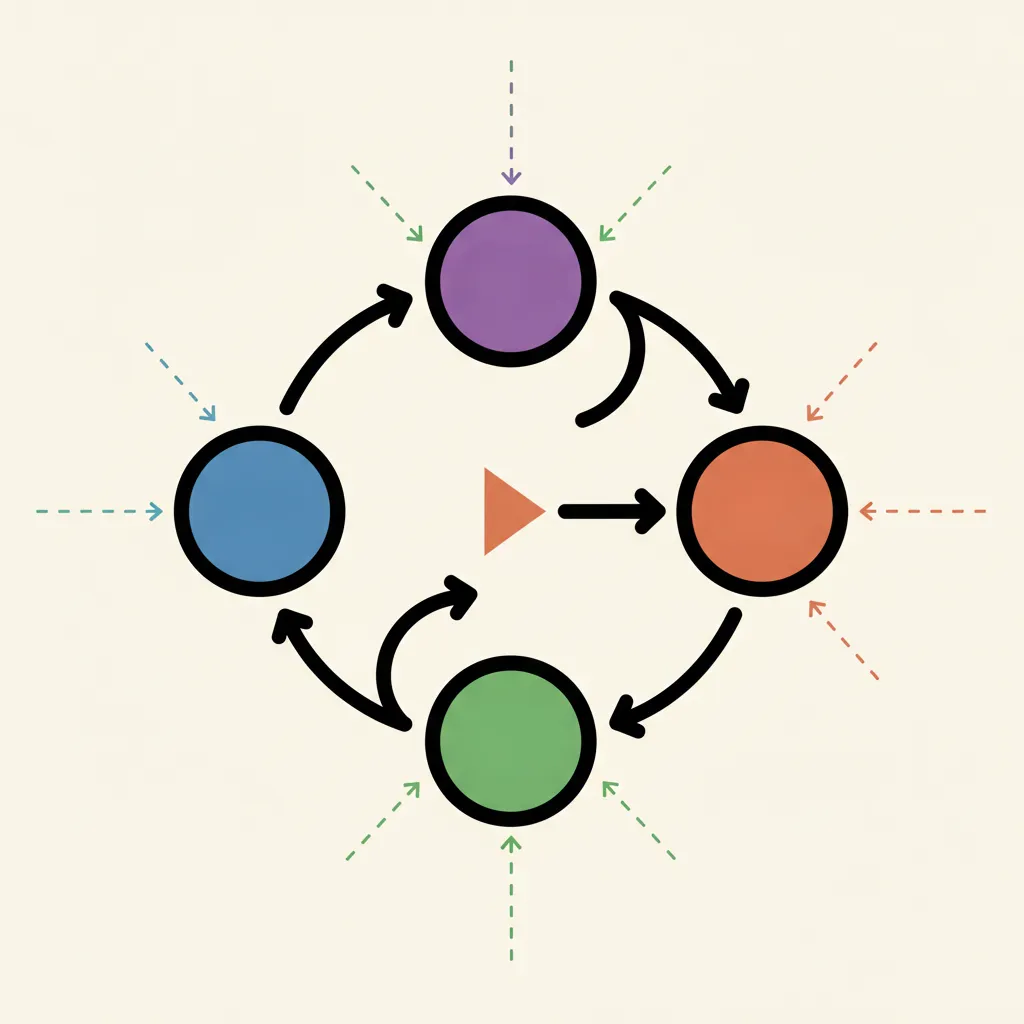
Stress doesn’t stay in one place. It creates feedback loops — patterns where one area of your health drives problems in another.
Chronic stress disrupts your sleep. Disrupted sleep shifts your metabolism. Metabolic shifts drive inflammation. Inflammation amplifies pain and mood changes — which makes stress worse. These aren’t isolated symptoms. They’re a connected pattern, and if you only address one piece, the loop keeps running underneath.
This is why someone can do everything “right” — meditate, eat well, exercise — and still feel off. The effort is real. But if the real driver is a metabolic-sleep loop, addressing mood alone won’t reach it. You need to see the connection to know where to aim.
Finding the Inflection Point
Your body responds to chronic stress by shifting how it functions day to day. Over time, those shifts add up across metabolism, mood, sleep, and inflammation. We’ve built a way to measure how much of that shift has accumulated — we call it your Allostatic Score.
Your Allostatic Score estimates how likely it is that chronic stress is already affecting your body at a physiological level. It’s calculated from 38 published studies — not a subjective 1-to-10 scale. It tells you where you stand, which areas are under the most pressure, and how they connect.
But the score isn’t the destination. It’s the starting point.
The assessment also identifies your specific combination of active and emerging patterns — which areas are feeling it most, and how they’re reinforcing each other. That combination shapes your action plan: which habit to start with, what to watch over time, and — if relevant — what to bring up with a healthcare provider.
Everything is built around giving you enough insight to make your own informed decisions. Not ten things to try. The one change most likely to shift the whole pattern.
Built for What Comes Next
The assessment is a starting point, not a destination. Habyt is building a platform that meets you wherever you are — whether that’s a five-minute screening or continuous tracking with coaching support.
At every level, the question stays the same: what’s the connection between what you’re doing and how you’re feeling? As you add more information over time, the picture gets sharper. The feedback loops become clearer. The right next step becomes more obvious.
And when you want guided support, our coaching programs pick up exactly where the report leaves off — helping you turn insight into action with someone in your corner.
One Habit at a Time
You don’t need to overhaul your life. You need to understand your pattern, find the most precise starting point, and begin there.
That’s what Habyt means. One habit — the right one — can shift everything downstream.
Take the Assessment and find out which habit matters most for you.
How This Article Was Made
Written by Dr. Vivek Narayan with Claude Code (Anthropic, Opus 4.6). Editorial direction and brand positioning by Dr. Vivek Narayan. Drafting and structural editing by Claude Code. Hero image generated via the Semantic Fidelity Loop (Gemini).
This information is for educational purposes and is not intended as a substitute for professional medical advice, diagnosis, or treatment.
Ready to Understand Your Pattern?
Take the assessment and get a personalized action plan based on your specific stress pattern.
Take the Assessment